How to Achieve OSHA Compliance: Step-by-Step Guide for Construction Companies

- Published On:
- OSHA Management
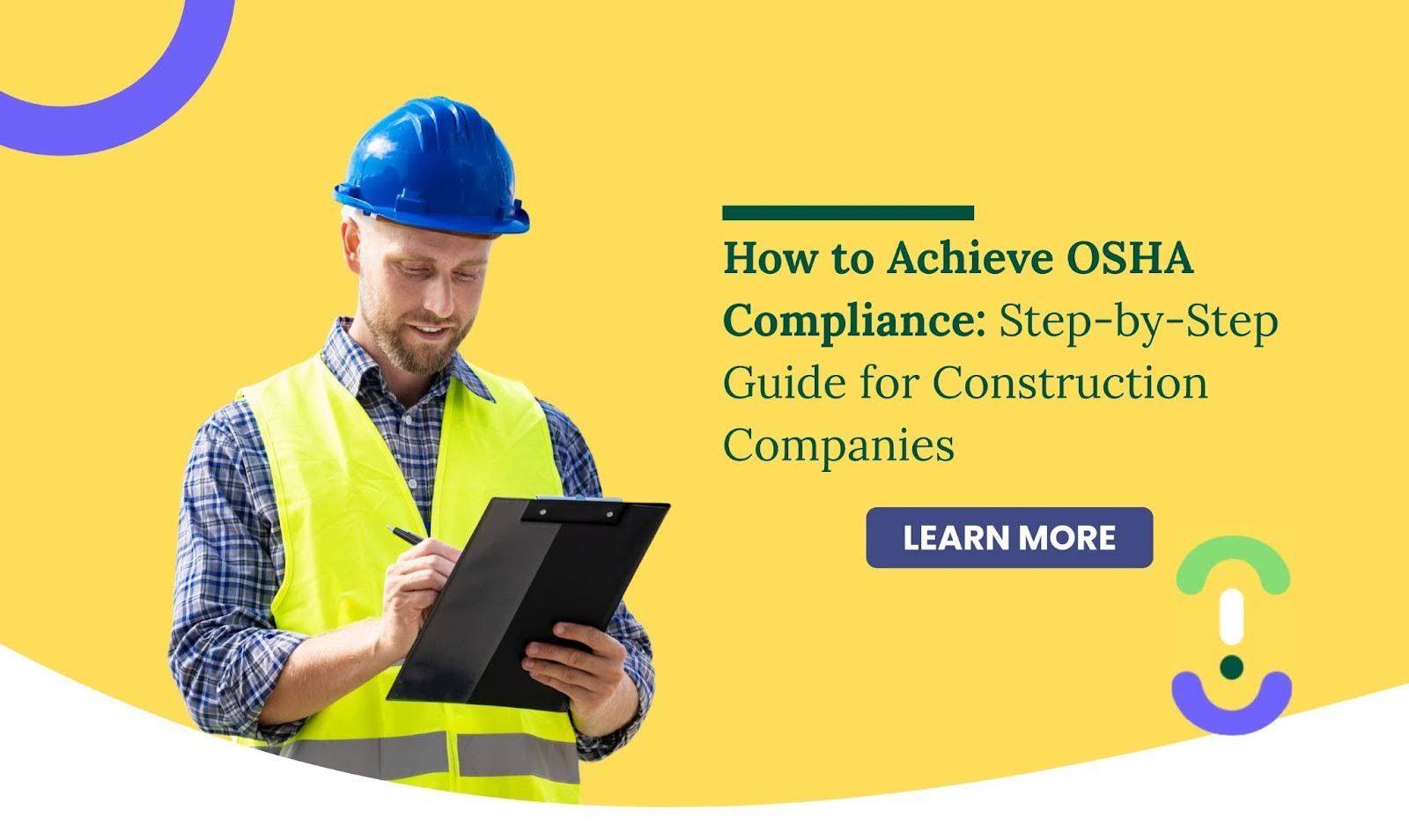
Construction companies operate under strict safety regulations that carry significant financial and legal consequences. Failing to meet OSHA compliance requirements results in penalties up to $16,550 for serious violations and $165,514 for willful violations as of January 2025. Fall protection alone generated over 6,500 citations in fiscal year 2024, making it the most frequently violated standard in construction. Beyond fines, non-compliance puts workers at risk, triggers project delays, increases insurance costs, and damages the company’s reputation with clients and regulators.
Why OSHA Compliance Matters for Construction Companies
Construction ranks among the most hazardous industries. According to OSHA’s commonly cited statistics, Fall Protection remains the most frequently cited standard in fiscal year 2024, followed by ladders, scaffolding, and eye protection.
The business case for compliance extends beyond avoiding fines:
- Companies with strong safety records win more bids and retain skilled workers
- Insurance premiums drop when incident rates improve
- Project delays from accidents decrease significantly
- Worker morale and productivity increase in safer environments
Knowella offers solutions that help construction companies manage OSHA requirements:
- OSHA Management simplifies compliance tracking
- Incident Management enables prompt response and investigations.
- Inspections Management tracks site safety checks
- Hazard Management streamlines hazard reporting
Step-by-Step Guide for Construction Companies to Achieve OSHA Compliance
Step 1: Develop a Written Safety Program
Every construction company needs a comprehensive written safety program. Document safety policies, procedures, and responsibilities. Identify potential hazards specific to your work sites and outline prevention measures. Include emergency response procedures, incident reporting requirements, and corrective action processes.
Step 2: Conduct Hazard Assessments
Walk through each job site before work begins. Look for fall risks, electrical hazards, trenching dangers, confined spaces, and equipment-related risks. Document every hazard and create a control plan. Repeat assessments when site conditions change. Use standardized checklists for consistent evaluations.
Step 3: Implement Training Programs
OSHA mandates specific training based on worker roles and hazards faced. New workers need safety orientation covering company policies, hazard recognition, and emergency procedures. Role-specific training must cover equipment operation, working at heights, or confined space entry. Document all training with dates, topics, and trainer information.
Step 4: Provide Personal Protective Equipment
Construction safety compliance requires providing appropriate PPE at no cost to workers. Standard equipment includes hard hats, safety glasses, high-visibility vests, gloves, and fall protection. Inspect equipment before each use and replace damaged items. Keep records of PPE distribution and maintenance.
Step 5: Establish Equipment Inspection Protocols
Construction equipment must be inspected before use to identify defects. Create equipment-specific checklists covering critical safety components. Tag defective equipment as out of service. Schedule maintenance based on manufacturer recommendations and keep detailed inspection logs.
Step 6: Focus on Fall Protection
Falls are the leading cause of construction fatalities. OSHA requires fall protection when workers are six feet or more above a lower level. Options include guardrail systems, safety net systems, or personal fall arrest systems. Train workers on proper use and inspection. Document all fall protection training and equipment inspections.
Step 7: Maintain Safety Records
OSHA requires tracking workplace injuries using specific forms. Maintain Form 300 (injury log), Form 300A (annual summary), and Form 301 (incident report) for five years. Record all work-related injuries requiring medical treatment, days away from work, or job transfers. Post Form 300A from February through April each year.
Step 8: Conduct Regular Inspections
Schedule frequent workplace inspections. Use detailed checklists covering fall hazards, electrical safety, scaffolding, ladders, PPE use, and equipment condition. Document findings and take immediate corrective action. Track trends to identify recurring issues. Review audit management best practices to strengthen inspection programs.
Step 9: Stay Current with Regulations
OSHA updates construction safety requirements regularly. Monitor OSHA’s website for changes. Subscribe to industry newsletters and participate in trade associations. Update safety programs promptly when new requirements take effect.
Step 10: Use Available Resources
OSHA offers free consultation services to help construction companies achieve compliance. Confidential consultations identify hazards and guide without triggering enforcement actions. Access OSHA’s training resources, including videos, guides, and industry-specific materials.
Benefits of OSHA Compliance for Construction Companies
- Reduced Workplace Injuries and Fatalities. Proper safety protocols prevent accidents before they happen. Fewer injuries mean fewer workers’ compensation claims, less lost productivity, and lower medical costs.
- Lower Insurance Premiums. Insurance providers reward companies with strong safety records. Consistent OSHA compliance reduces your Experience Modification Rate (EMR), resulting in significant premium savings over time.
- Avoiding Costly Penalties. With serious violations costing up to $16,550 and willful violations reaching $165,514, a single OSHA citation can wipe out project profits. Compliance protects your bottom line.
- Winning More Contracts General contractors and project owners increasingly require subcontractors to demonstrate safety compliance. A clean OSHA record gives your company a competitive edge during bid evaluations.
- Improved Worker Retention and Morale. Skilled tradespeople prefer employers who prioritize their safety. A strong safety culture reduces turnover and attracts experienced workers in a competitive labor market.
- Fewer Project Delays Workplace accidents halt operations, trigger investigations, and disrupt schedules. Proactive compliance keeps projects on track and on budget.
- Protection from Legal Liability Documented safety programs and training records provide legal protection if accidents occur. Compliance demonstrates due diligence in court and regulatory proceedings.
Build a Culture of Safety With Knowella
Construction companies that prioritize safety see measurable improvements in productivity, worker retention, and project outcomes. Knowella’s Health & Safety Management solution provides a no-code platform to digitize safety programs, automate compliance tracking, and maintain audit-ready documentation.
Frequently Asked Questions
Fall protection tops the list, followed by ladders, scaffolding, and eye protection, according to OSHA's fiscal year 2024 data.
Workers need initial training when hired, task-specific training before new work, and refresher training annually or when gaps appear.
Officers arrive unannounced, tour the worksite, examine records, and interview workers. Companies can contest citations within 15 days.
Yes, safety standards apply to companies of all sizes. Some recordkeeping requirements exempt companies with 10 or fewer employees.
Digital platforms enable instant incident reporting, automated inspection scheduling, mobile safety procedures, and centralized documentation.
Our tailored solutions address your industry’s distinct challenges, fostering growth and compliance.

Your Journey Starts with Knowella
Revolutionize your operations today with Knowella. Experience unparalleled efficiency, safety, and quality as you empower
your teams with the tools to excel. Elevate your business to new heights; explore Knowella now.

QA prevents defects through process design. QC detects defects through inspection. See the 5 key differences between quality assurance and quality control.
Achieve OSHA compliance in construction with steps for safety programs, training, and inspections.

Automate OSHA safety tracking, training records, and inspections for manufacturing facilities.