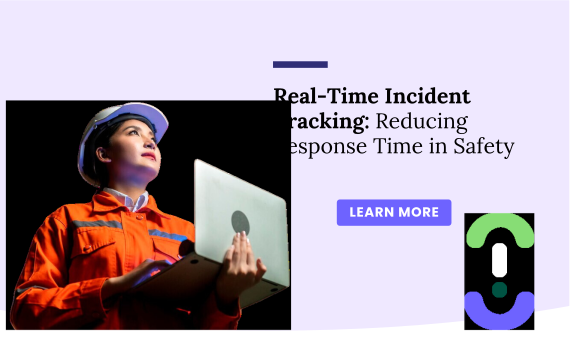
Real-time incident tracking has become essential for operations, supply chain, and safety teams that need reliable frontline data to act faster when something goes wrong. When hazards are logged late or through fragmented channels like paper forms or radio updates, supervisors
Why safety managers search for real-time incident tracking software
Safety managers search for real-time incident tracking when paper, spreadsheets, radio calls, and verbal messages start creating slowdowns. Without a unified system, information arrives late, details get lost, and supervisors receive incomplete context. Those delays increase the chance of injuries, inconsistent decision-making, and weak audit readiness.
Real-time systems replace those gaps with structured digital reporting. Frontline workers capture incidents within seconds, supervisors receive alerts immediately, and investigation steps begin without waiting for end-of-shift summaries.
Organizations often refer to the Top 10 Incident Management Software to compare tools that support accurate reporting and faster response times.
What real-time incident tracking means inside incident tracking software
Real-time tracking means the moment a hazard, near miss, or injury appears, the information enters one digital pipeline. Photos, videos, location details, and timestamps are captured instantly, and supervisors receive the notification without relying on long paper trails.
Teams customize these workflows using the App Builder, which allows them to design forms and logic without depending on IT teams.For structured hazard categorization, analysis, and prioritization, safety teams use Hazard Management to track issues across shifts and locations.
Why fast response time matters for workplace safety and incident management software
Reducing response time is the core purpose of real-time incident tracking. When supervisors act early, injury outcomes improve, escalation slows, and evidence remains more accurate.
1. Lower injury severity
Early interventions reduce exposure and help workers receive timely medical attention. Clear information improves coordination between supervisors, first aid teams, and operators, which stabilizes situations faster.
2. Fewer repeat incidents
Repeat incidents signal unaddressed risks. Real-time reporting gives leaders early visibility into unsafe trends so they can update training, inspections, and maintenance plans.
3. Stronger compliance posture
Audit programs depend on reliable evidence. Time-stamped logs, follow-up records, and consistent workflows meet regulatory expectations. Safety teams often review the Top 10 OSHA Management Software when evaluating compliance-focused features.
4. Cost control
When incidents escalate, organizations face lost productivity, equipment damage, and investigation time. Faster response keeps these costs under control. Many risk leaders cross-reference the Top 10 Risk Management Software to build a complete view of risk mitigation.
How real-time incident tracking systems work inside modern safety teams
These systems create clear, dependable steps for capturing, routing, assessing, and resolving incidents.
1. Incident capture at the source
Frontline workers report issues directly from mobile devices. Incident Management supports photos, videos, severity tags, and location data to provide full context.
2. Routing and escalation
Digital rules assign incidents based on severity and location. Supervisors and EHS leads receive alerts instantly, removing guesswork about who must act first.
3. Mobile access for field teams
Mobile reporting ensures workers in remote locations or large facilities can submit incidents without leaving their task area. Offline capture protects data even during low connectivity.
4. Real-time visibility for decision makers
Dashboards consolidate incidents, actions, and training records. Health & Safety Management centralizes these views so leaders can allocate resources based on real-time needs.
5. Digital audit trail
Every action is recorded for review or regulatory audits. Teams align their inspection programs with frameworks recommended in the Top 10 Inspections Management Software to strengthen evidence and consistency.
Which technologies support instant alerts in real-time incident tracking
Instant alerts require multiple tools working in sync so critical information moves fast and accurately.
IoT sensors
Sensors detect temperature spikes, vibration abnormalities, gas levels, or other environmental risks, triggering early alerts before hazards escalate.
Wearables
Wearables track fatigue, posture, or movement patterns. They help identify ergonomic risks that often remain invisible until injuries occur.
Mobile reporting applications
Mobile tools allow workers to report hazards immediately with photos and short notes. With App Builder, teams tailor reporting forms to their exact process needs.
AI-powered detection tools
AI-based tools such as Camera Alerts monitor live CCTV and IP camera feeds, identifying blocked exits, unsafe actions, or PPE gaps.Ergonomics analysts rely on AI Ergonomics for posture scoring, repetitive motion evaluation, and automated risk reports.
For a deeper background, many teams read Industrial Ergonomics 101 to understand how posture and repetition contribute to workplace injuries.
What challenges do safety teams face when adopting real-time tracking
Adopting new systems requires changes in habits, expectations, and culture.
1. Worker adoption
Workers may worry that new tools increase workload. Simple forms and clear explanations help reduce resistance and build trust.
2. Alert accuracy
AI tools and sensors require calibration. When tuned correctly, alerts become reliable signals instead of noise.
3. Connectivity gaps
Large outdoor sites or underground facilities often have low connectivity. Offline-enabled apps prevent reporting delays.
4. Training and clarity
Teams need clear expectations on what to report and how to categorize issues. Safety leaders use the 8 Common Mistakes in Health and Safety Management Systems to avoid gaps that slow adoption.
What best practices help teams reduce emergency response time with incident tracking software
Fast response becomes easier when teams follow consistent routines and use structured workflows.
1. Escalation rules linked to severity
Clear severity-based rules ensure the right people receive alerts at the right time.
2. Regular simulations and drills
Simulations help teams practice under pressure and reveal bottlenecks that slow response.
3. Cross-training
Cross-training keeps workflows moving even when supervisors leave their stations or shift changes occur.
4. Standard categories
Consistent categories support trend analysis. Hazard Management helps teams maintain clarity across reports and track the biggest risks.
5. Predictive analytics
Predictive analysis identifies leading indicators such as frequent near misses or recurring unsafe patterns. Many leaders compare these capabilities with the tools listed in the Top 10 Risk Management Software.
How real-time data supports better decisions for safety leaders
Real-time data gives leaders clear insight into patterns, resource needs, and compliance posture.
1. Better hazard assessment
Consistent reporting makes it easier to identify trends across shifts, contractors, and locations.
2. Stronger resource planning
Leaders can allocate training, inspections, and maintenance where risk is highest.
3. Easier KPI monitoring
Metrics such as response time and closure rates become more reliable through Health & Safety Management, which consolidates critical records into unified dashboards.
Conclusion
Real-time incident tracking reduces response time, strengthens decision-making, and protects frontline teams. When every report moves through one structured workflow, supervisors act faster, leaders gain a complete risk picture, and investigations run with fewer delays.
Knowella supports that system through Incident Management, Camera Alerts, AI Ergonomics, App Builder, Health & Safety Management, and Hazard Management, helping operations, supply chain, and safety teams replace paper, spreadsheets, and siloed tools with one connected, frontline-first platform.
Knowella helps organizations digitize and automate frontline operations, supply chain, and workplace safety-related programs, processes, and workflows; replacing paper, spreadsheets, and siloed tools with smart, no-code automation.