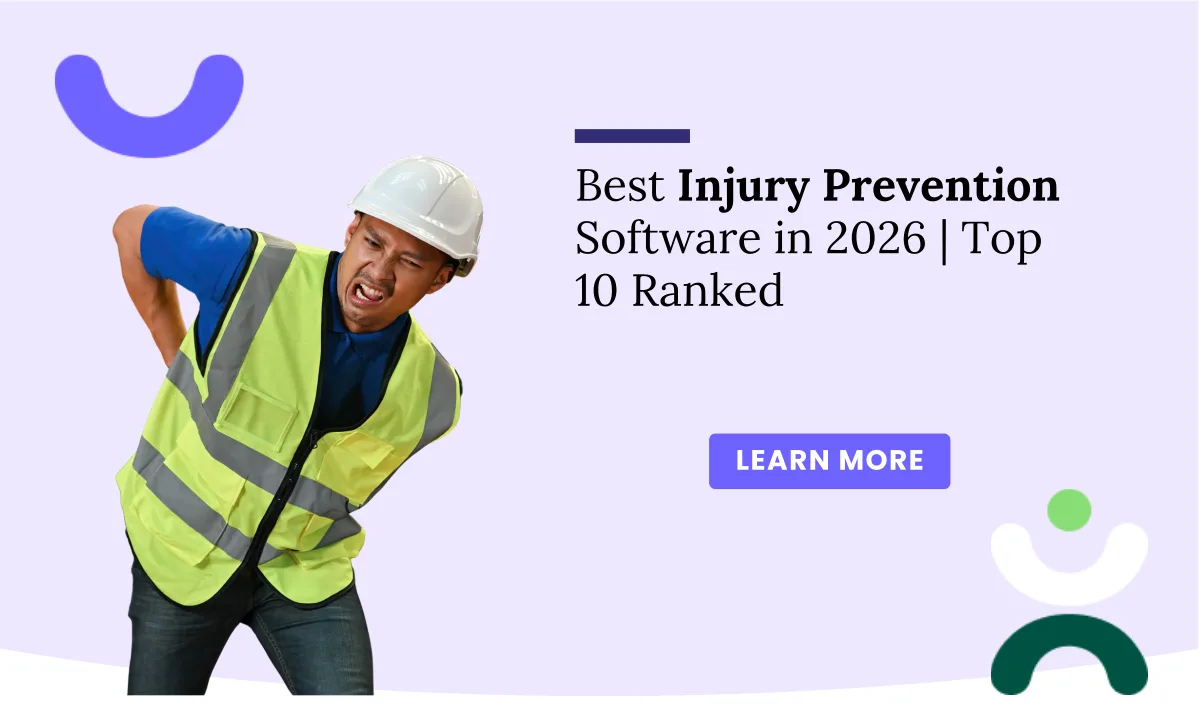
Most injury prevention programs are built around the injuries that already happened. A strain gets reported, an investigation follows, a fix is put in place, and the team moves on until the next one. Meanwhile, the jobs carrying the highest ergonomic risk keep running every shift, unassessed and unranked, because nobody has a clear view of where the next sprain or strain is most likely to come from.
Sprains, strains, and other musculoskeletal disorders remain among the most common and expensive workplace injuries. They drive lost workdays, workers' compensation costs, turnover, and lower productivity, especially in manufacturing, warehousing, logistics, food processing, and healthcare. The good news is that most are preventable when risk is measured consistently, ranked across jobs and sites, and fixed through real corrective action.
Ergonomics and injury prevention software moves safety programs from reactive to proactive. In this guide, we've rounded up the top 10 ergonomics and injury prevention software solutions, with each tool's strengths, key features, pricing, and supported platforms.
1. Knowella
Why Use Knowella? Knowella is an AI-powered operations and safety platform that helps teams identify and reduce ergonomic risk before it becomes injury. Its Ergonomics & Injury Prevention solution assesses tasks, scores risk, and drives corrective action across every site, cutting sprains, strains, and musculoskeletal disorders.
Teams run validated assessments, including RULA, REBA, the NIOSH lifting equation, Snook tables, WISHA, and MAC, from any device, plus custom checklists built with no code. Live risk scoring and heat maps show which jobs, lines, and sites carry the most ergonomic risk, so resources go where they matter most. Fixes such as job redesign, rotation, or new equipment are triggered, assigned, and tracked to closure with reminders. AI flags high-risk postures and repetitive motions from video and assessment data so teams can intervene early. Discomfort reports, near-misses, and recordables link back to the tasks and assessments behind them for closed-loop prevention, while dashboards trend risk scores, open actions, and injury rates to prove the program is working.
- Standardized RULA, REBA, NIOSH, Snook, WISHA, and MAC assessments
- Risk scoring and heat maps across jobs, lines, and sites
- Automated corrective actions tracked to closure
- AI hazard detection from video and assessment data
- Injury and near-miss records linked to tasks and assessments
Pricing: Contact Knowella for custom pricing plans
Platforms Supported: Web, iOS, Android
Explore: Book a Demo
2. Mitti (by SafetyCulture)
Why Use Mitti? Mitti is a leading occupational health and safety platform with injury prevention capabilities. Teams use digital templates for hazard identification and behavior-based observations, report near misses, and deliver injury prevention training.
- Hazard identification and injury prevention templates
- Hazard and near-miss reporting and investigation
- Injury prevention training and safety analytics
Free Version: Yes, for teams of up to 10
Pricing: Premium plan at $24/seat/month (free trial available)
Platforms Supported: Web, iOS, Android
3. VelocityEHS
Why Use VelocityEHS? VelocityEHS is a major EHS provider with a dedicated industrial ergonomics solution, combining ergonomic assessments and AI-assisted task analysis with broader safety programs.
- Industrial ergonomics assessments
- AI-assisted task analysis
- Incident and EHS program integration
Free Version: No
Pricing: Contact VelocityEHS for pricing
Platforms Supported: Web, PC, iOS, Android
4. CorityOne
Why Use Cority? CorityOne brings safety, occupational health, and ergonomics into one enterprise platform, helping large organizations connect risk data to injury and health outcomes.
- Safety and ergonomic risk tracking
- Occupational health management
- Predictive analytics
Free Version: No
Pricing: Starts at around $50,000/year
Platforms Supported: Web, iOS, Android
5. KPA Flex
Why Use KPA Flex? KPA Flex is a full-featured EHS suite focused on compliance, risk management, and safety training. Its flexibility lets companies tailor injury prevention programs to their industry.
- Audits and inspections
- Reporting and dashboards
- Toolbox talks
Free Version: No
Pricing: Contact KPA for pricing
Platforms Supported: Web, iOS, Android
6. SafetyAmp
Why Use SafetyAmp? SafetyAmp is a customizable EHSQ platform known for strong incident management and analytics, helping teams identify hazards and manage risks before they escalate.
- Audits and inspections
- Safety training
- Analytics and dashboards
Free Version: No (free trial available)
Pricing: Champion plan starts at $4,800/year
Platforms Supported: Web, iOS
7. Veriforce
Why Use Veriforce? Veriforce began as a contractor and supplier compliance platform and now offers safety management tools, leading indicator tracking, and predictive risk modeling that support injury prevention.
- Leading indicator tracking
- Predictive risk modeling
- Industry-standard training content
Free Version: No
Pricing: Contact Veriforce for pricing
Platforms Supported: Web
8. Briotix Health
Why Use Briotix Health? Briotix Health combines injury prevention software with ergonomic consulting and onsite therapy services, offering a blended approach to worker health.
- Industrial Sports Medicine programs
- Office health and ergonomics
- Functional employment testing
Free Version: No
Pricing: Contact Briotix Health for pricing
Platforms Supported: Web, iOS, Android
9. OccuPro
Why Use OccuPro? OccuPro started in occupational rehabilitation and has grown into an injury prevention platform focused on ergonomics, training, and reducing musculoskeletal issues.
- Real-time incident data
- Training modules
- Functional capacity evaluation
Free Version: No
Pricing: Custom pricing
Platforms Supported: Web
10. Aware360
Why Use Aware360? Aware360 is a human-centric IoT platform for lone and remote workers, tracking location and safety status and sending emergency alerts for fast intervention.
- Connected worker ecosystem
- Lone worker safety app
- Mobile worker alerts
Free Version: No
Pricing: Custom pricing
Platforms Supported: Web, iOS, Android
What Is Ergonomics and Injury Prevention Software?
Ergonomics and injury prevention software is a digital system that helps organizations find and reduce the conditions that lead to workplace injuries, especially musculoskeletal disorders like sprains, strains, and repetitive motion injuries. Instead of reacting after someone gets hurt, it focuses on leading indicators: risky postures, heavy lifts, repetitive tasks, near-misses, and early discomfort.
A complete program typically includes standardized ergonomic risk assessments, risk scoring and ranking across jobs and sites, corrective action tracking, incident and near-miss reporting, training, and dashboards that show whether risk and injury rates are falling. Some tools specialize in one area, such as lone worker IoT, wearable sensors, or onsite therapy services. Broader EHS suites cover safety in general. Platforms like Knowella combine ergonomic assessments, risk heat maps, AI hazard detection, corrective actions, and injury records in one closed loop, so prevention efforts are measurable from start to finish.
Why Use Ergonomics and Injury Prevention Software?
Fewer sprains, strains, and MSDs. Finding and fixing high-risk tasks before they cause harm directly reduces recordable injuries.
Lower costs. Fewer injuries mean lower workers' compensation premiums and claims, less lost time, and less overtime to cover absences.
Clear priorities across sites. Risk scores and heat maps show exactly which jobs, lines, and facilities need attention first.
Fixes that actually happen. Automated corrective actions with owners and reminders make sure assessments turn into real changes.
Earlier intervention. AI and leading indicators surface risk patterns before they become injury trends.
Proof the program works. Dashboards that track risk scores, actions, and injury rates over time help justify investment to leadership.
A stronger safety culture. When workers see hazards fixed quickly, they're more engaged, more likely to report concerns, and more likely to stay.
Key Features to Look For
- Validated ergonomic assessments: RULA, REBA, NIOSH, Snook, WISHA, MAC, and custom checklists.
- Risk scoring and heat maps: Rank risk by job, line, department, and site.
- Corrective action management: Assign fixes like job redesign, rotation, or equipment, and track them to closure.
- AI hazard detection: Flag risky postures and repetitive motions from video and data.
- Incident and near-miss reporting: Link events back to the tasks and assessments behind them.
- Early symptom reporting: Let workers flag discomfort before it becomes an injury.
- Training: Deliver and track ergonomics and injury prevention training.
- Dashboards and trends: Track risk scores, open actions, and injury rates over time.
- Mobile access: Complete assessments and reports on the floor.
How to Choose the Right Tool for Your Organization
Start by identifying your biggest injury drivers. If lone or remote workers face the greatest risk, connected worker platforms like Aware360 are designed for that. If you want ergonomic consulting and onsite therapy alongside software, Briotix Health and OccuPro offer a blended service model. Organizations that want broad EHS coverage with injury prevention as one part may consider KPA Flex, SafetyAmp, Veriforce, VelocityEHS, or Cority.
For manufacturers, warehouses, and logistics operations where sprains and strains drive most injuries, ergonomics needs to be at the center of the program, not an add-on. That means consistent assessments, clear risk rankings across sites, corrective actions that get done, and data that links injuries back to their causes. Mitti offers strong hazard reporting and training, while Knowella brings validated assessments, risk heat maps, AI hazard detection, automated corrective actions, and injury tracking together on one no-code platform.
Finally, think about who will use the tool every day. Supervisors and safety reps need assessments that are fast on a phone, and leaders need dashboards that clearly show progress. A demo using a few of your highest-risk jobs is the best way to compare.
Conclusion
The best injury prevention programs don't wait for injuries to tell them where the risk is. They measure it, rank it, fix it, and prove the fix worked. Paper assessments and lagging injury reports can't do that at scale. The tools on this list all help shift safety from reactive to proactive, from enterprise EHS suites to connected worker and ergonomic service platforms.
For operations teams that want to cut sprains, strains, and MSDs across every site, Knowella offers a complete ergonomics and injury prevention solution: standardized RULA, REBA, NIOSH, and Snook assessments, risk scoring and heat maps, automated corrective actions, AI hazard detection, and linked injury records, all on a no-code platform that goes live in minutes.
Ready to reduce ergonomic risk before it becomes injury? Explore Knowella Ergonomics & Injury Prevention or book a demo to see how it fits your operation.